Background
The Santa Croce Research Laboratory was born in the academic year 2021-2022, when a reflection process regarding the research began, thanks to the suggestion made by Pope Francis' Apostolic Constitution Veritatis gaudium.
The document revealed the fact that:
In this effort, the worldwide network of ecclesiastical universities and faculties is called to offer the decisive contribution of leaven, salt and light of the Gospel of Jesus Christ and the living Tradition of the Church, which is ever open to new situations and ideas. (Veritatis Gaudium; 3, c).
The occasion of the upcoming 40th Anniversary of the University in the Rector's Council presents us with the opportunity of fulfilling the Pope's wish.
With the aim of involving everyone in the process, the laboratory has started from listening to the professors, who were invited to provide their suggestions on desirable research themes and methods, within a general framework.
The overall aim is to promote collaborative, interdisciplinary or trans-disciplinary, international research, in partnership with other pontifical, Catholic and lay universities, focused on themes of evangelizing value impact.
Creating Network
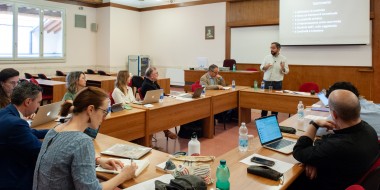
Hence, were created focus groups composed by professors from different fields, in order to promote and encourage dialogue between the Faculties. This promoted the creation of an environment in which professors had the opportunity to interact, exchange ideas and conceive strategic research topics for the future of the University. Through these multidisciplinary exchanges, the focus groups also contributed to the creation of new partnerships. A final document was drawn up, including all the different contributions and priorities highlighted by the professors.
In the 2022 - 2023 academic year, the first Call for projects was held. As a result, 13 projects were presented which are involving 38 institutions from 17 different countries, for a total of 60 professors from our University and 49 from other academic institutions. Thus, the following 3 research groups were chosen by the Scientific Committee (made up of internal and external professors at the University):
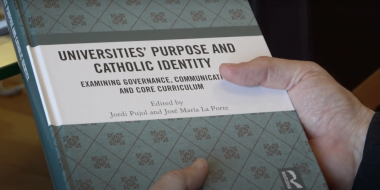
University and Catholic Identity
Footprints. Young people: Expectations, Ideals, Beliefs
Towards a Theology of Evangelization
The second Call for Projects started in September 2023 and submissions were accepted until February 2024. The evaluation of the new research project was submitted on May 2024. Thus, there were selected 4 new research groups:
A Cross-Disciplinary Inquiry into Human Creativity
Purpose and Models of Governance in the Church
Rediscovering the Individual. An inquiry into a reshaped metaphysics
Towards a culture of care. A response to the anthropological crisis
Sezione: