School of Church Communications

Comunicazione Istituzionale

The Pontifical University of the Holy Cross established the School of Church Communications in 1996 to prepare communication professionals for ecclesial institutions. 

Patroness     Flyer     Conference April 27-28, 2026 C.S. Lewis

The School’s program offers students solid, systematic courses in four key areas:

  • The nature of communication and the elements upon which it is based. This includes the processes of shaping public opinion, the structure of information-based entities and the language of the traditional means of communication (radio, tv, press), as well as the new technology-based media.
  • The Church in cultural context. The Church presents its message and incarnates the faith in an ongoing dialogue with men, women and cultures. This area investigates of how Christianity has developed and expressed its message over the centuries, transforming it into a catalyst of cultural change.
  • The theological, philosophical and canonical content of the faith and its impact on the identity of the Church as an Institution.
  • The application of these theories, practices and communication techniques to institutions of the Church, bearing in mind their particular identity. Special emphasis is given to how communication offices are organized, methods of communicating with the various interlocutors of the Church and the presentation of the content of the faith in the field of public opinion.

In evidenza

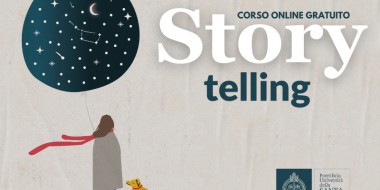
A new MOOC (free online course) offered by the School of Communication on Storytelling has been launched on the Discere platform. The course will be available until December 15, 2024.

Led by Professor Juan Narbona, who teaches Value Storytelling at the same School of Communication, the course is accessible in Spanish, English, and Italian. Through 12 video lessons, each lasting 3-4 minutes, the importance and power of stories and how to use them in communication are explained.

Concepts such as the power of stories, narrative structure, character creation, conflict, moral theme, and more are explored in depth. As additional material, 10 narratives (TV spots, speeches, and others) are analyzed to illustrate some of the main ideas.

On Wednesday November 27, 2024, (at 11:30 AM in the Álvaro del Portillo Auditorium) our University hosted a meeting entitled John Paul II and Galileo: A Study Meeting on the Work of the Pontifical Commission for the Study of Copernicanism and the Dialogue between Science and Faith, as part of the John Paul II Days at the Pontifical Universities of Rome, promoted by the John Paul II Vatican Foundation.

Participants:

Professor Rafael A. Martínez, Chair of Philosophy of Nature and Science at the Pontifical University of the Holy Cross, and Monsignor Melchor Sánchez de Toca, co-author of 'Galileo and the Vatican: History of the Pontifical Commission for the Study of the Galileo Case (1981-1992)' (Marcianum Press, Venice 2009).

On the occasion of our University's 40th anniversary, celebrated in the academic year 2024/25, we are launching the "University Life" Photography Contest, open to students, professors, and administrative staff.

Entries will be accepted until Tuesday, December 3, 2024. As outlined in the Official Notice, the contest aims to capture the most significant moments of your university experience through photography.

Each participant may submit a maximum of three (3) photographs. Photographs must be original and submitted in JPEG format with a resolution of 300 dpi. Works created using computer graphics or artificial intelligence are not permitted. Photographs may be adjusted for brightness and contrast but must not contain structural modifications.

On Thursday, October 24, 2024 (9:00 am, Aula Magna Giovanni Paolo II), the 2024 Doctoral Students' Day was held at the initiative of the four Schools. After the opening remarks, prof. Jaime Nubiola, emeritus professor of Philosophy at the University of Navarra, gave a lectio magistralis entitled The Intellectual Life of a PhD Student: Reading, Thinking, Writing.

Two round tables followed. One on The First Steps of the PhD, coordinated by profs. José María Díaz, Kenny Ang, and Jaime Moya, and the other on The Thesis Writing Process, coordinated by profs. Gema Bellido, Gonzalo de la Morena, and Claudio Tagliapietra.

Poster

Pages

Follow the university's activities

Newsletter - L'Appuntamento

Stay up to date on our activities and events

Subscribe